

UPVC windows have become a popular choice in modern construction due to their durability, energy efficiency, and low maintenance. This blog on UPVC Window Types Explained with Examples will help homeowners and builders understand different styles, their benefits, and where they are best used. Whether you are renovating or building from scratch, knowing the right UPVC window design can make a big difference in comfort and aesthetics.
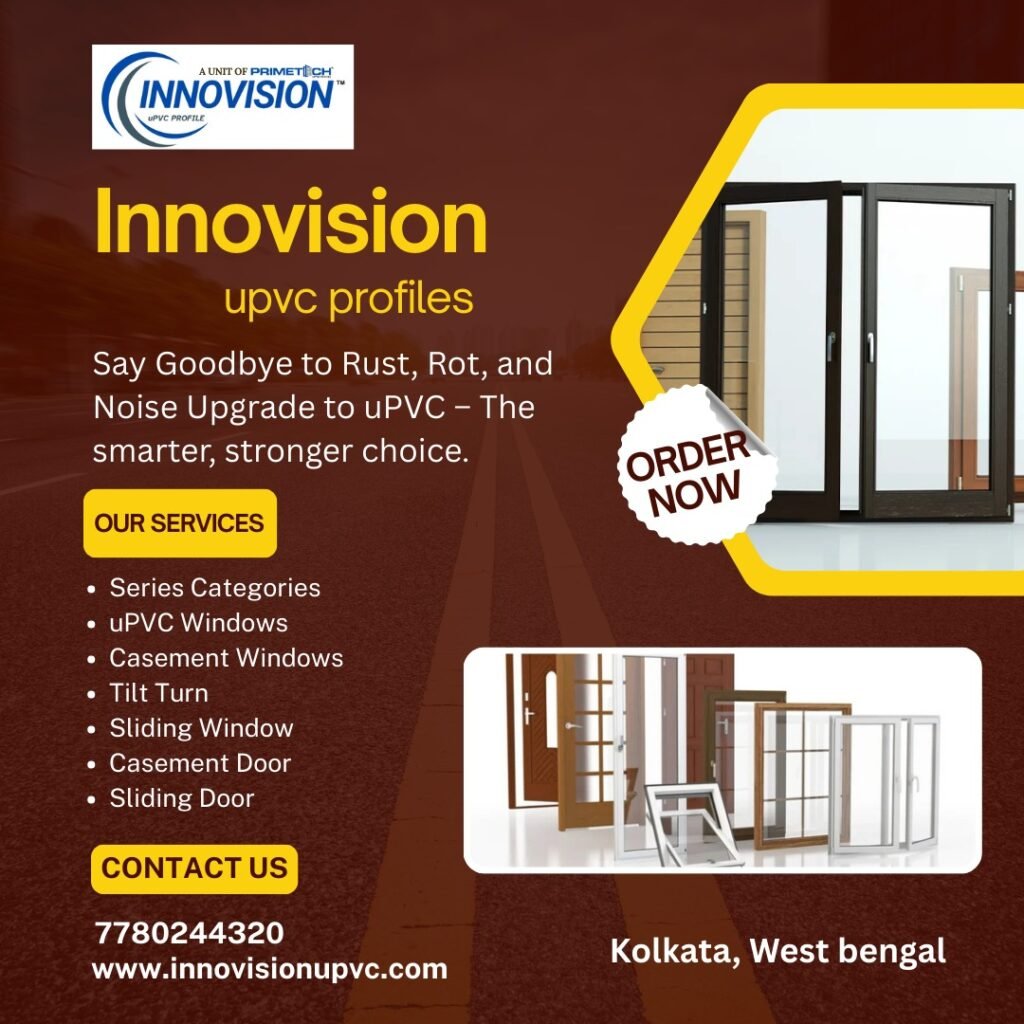
Casement UPVC Windows
Casement windows are one of the most widely used UPVC window types. These windows open outward or inward with the help of hinges, allowing maximum ventilation and clear outdoor views. Casement UPVC windows are ideal for living rooms and bedrooms where airflow and natural light are essential. Many homeowners prefer this style for its tight sealing, which improves insulation and reduces noise. Brands like Innovision often recommend casement windows for their strength and flexibility in design.
Sliding UPVC Windows
Sliding windows are perfect for spaces where opening room is limited. They operate horizontally on tracks, making them easy to use and maintain. Sliding UPVC windows are commonly installed in apartments, balconies, and kitchens. Their sleek design adds a modern look while maintaining excellent weather resistance. When choosing “best UPVC windows for homes”, sliding windows are often highlighted for urban living spaces and compact areas.
Tilt and Turn UPVC Windows
Tilt and turn windows offer dual functionality, allowing the window to tilt inward for ventilation or open fully like a door. This makes cleaning easy and enhances safety, especially in high-rise buildings. Tilt and turn windows are known for their versatility and energy efficiency. According to Innovision Upvc specialists, this style is ideal for homeowners looking for advanced functionality combined with elegant design.
Fixed UPVC Windows
Fixed windows do not open and are designed purely to let in light and enhance aesthetics. They are commonly used in combination with other UPVC window designs to create large glass areas. Fixed UPVC windows are cost-effective and provide excellent insulation. They are often included when discussing “energy efficient UPVC window designs” for modern architecture.
Bay and Combination UPVC Windows
Bay windows extend outward from the building, creating additional interior space and panoramic views. Combination UPVC windows mix multiple styles such as fixed, sliding, or casement windows in one frame. These designs add architectural value and improve ventilation. Innovision recommends these window types for villas and luxury homes where style and performance matter equally. Many homeowners researching “types of UPVC windows with prices” find bay and combination windows a premium yet rewarding choice.